
Located amidst the magical wilderness of Mount Shasta, in a densely-forested valley just below Castle Crags, students live alongside a spring-fed creek that runs through our 83-acre campus.
The valley backs up to Castle Crags State Park, with its extensive hiking trails connecting directly to the Pacific Crest Trail. Turn right to walk to Canada. Turn left to walk to Mexico.
Students live in tiny home-cabins that they help to construct, on the 40 acres up the valley from the Jubilee Railroad Wilderness Lodge, a working social enterprise owned by Jubilee College.
The Lodge is not separate from the College. Students work on projects that support the Lodge and its employees; they benefit from the hundreds of guests who come through each year; they engage in various kinds of community development and social entrepreneurship. We call it sacred hospitality – learning how to support one another’s gifts as a part of a team that is hosting other human beings in the magic of this place.
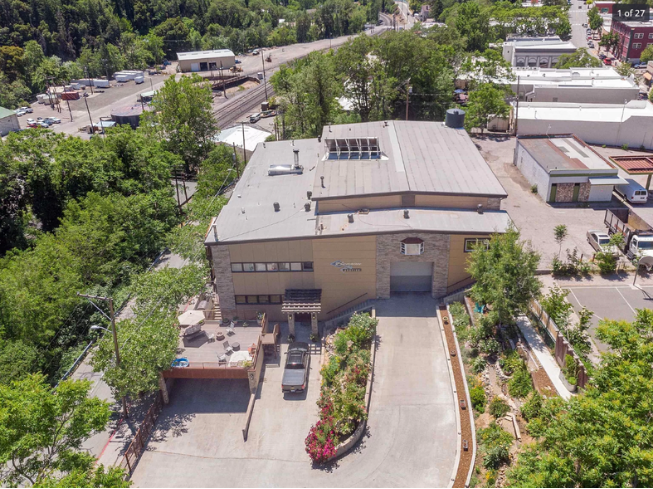
Our classrooms, indoor and outdoor student lounges, and community kitchen are held in a beautifully remodeled, historic building in downtown Dunsmuir, formerly the town’s elementary school. We have kept the name, “The Elementary School”, because of our commitment, both to a beginner’s mind, and to working with the elements in the alchemical process of creating new futures. The town itself is a small community of approximately 1600 people – a fifteen-minute bike ride or three-minute drive from the valley campus.
A typical weekday for students and the learning community begins with a practice of inner work chosen by the student. Mornings are devoted to teaching and learning. Afternoons move into mentoring and service work projects. Two shared meals anchor each day, and a biweekly community council provides the structure for collective reflection and communal decisions. All students and staff participate in regular physical work.


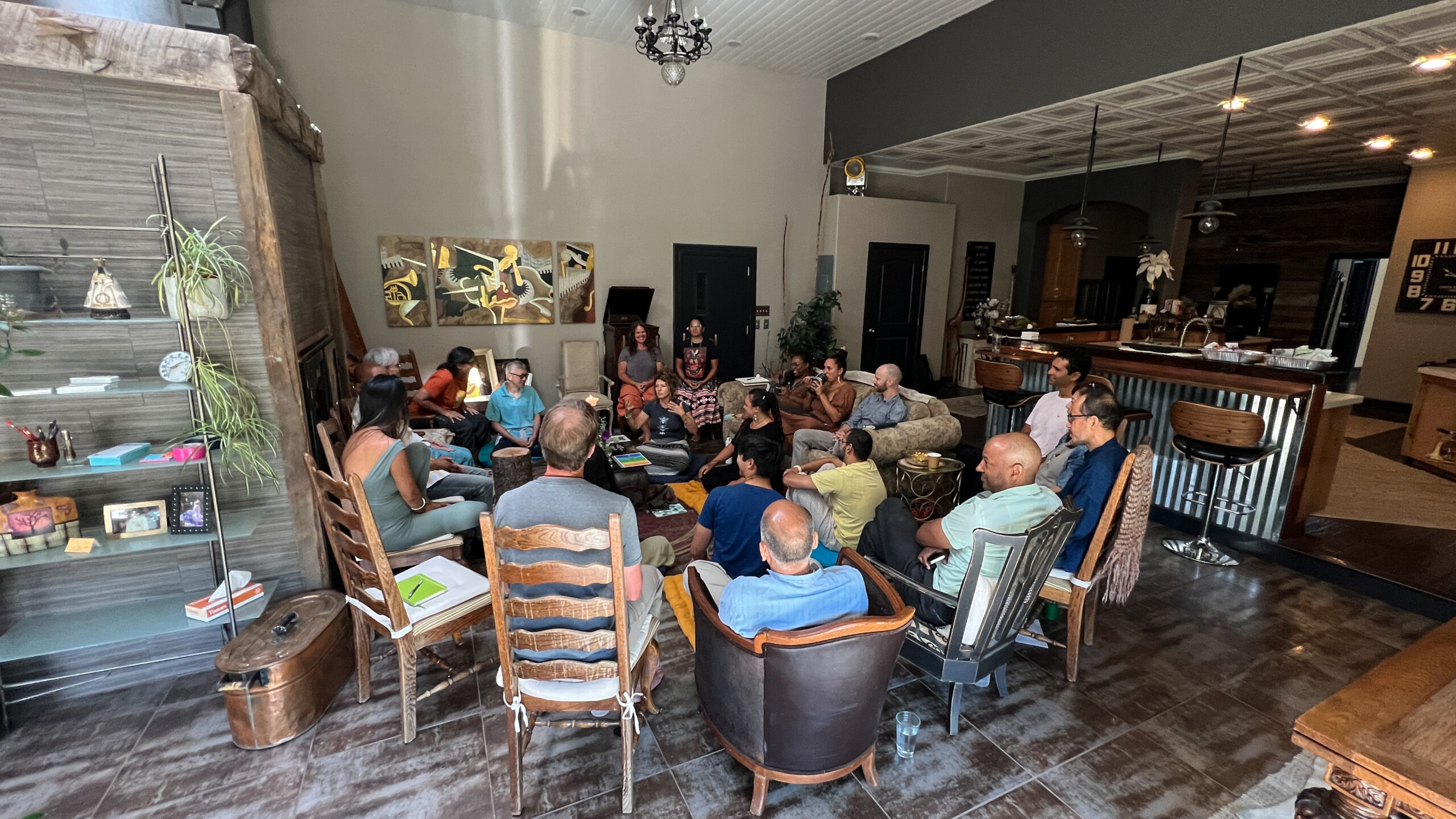
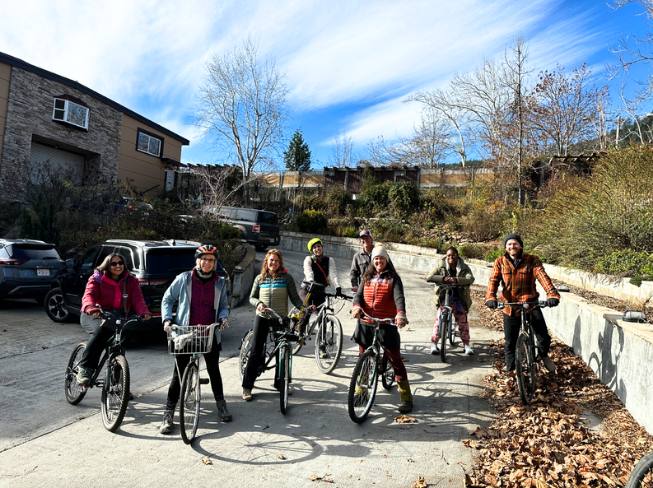
Communal living, working, and traveling together, requires good communication, and students and faculty take turns hosting dialogue focused on community agreements, diverse perspectives, conflict resolution, and shared intentions. The work of maintaining the college — food preparation, land care, facilities maintenance — is understood not only as logistical necessity but an opportunity to develop a much wider perspective on what it means to serve something larger than oneself.
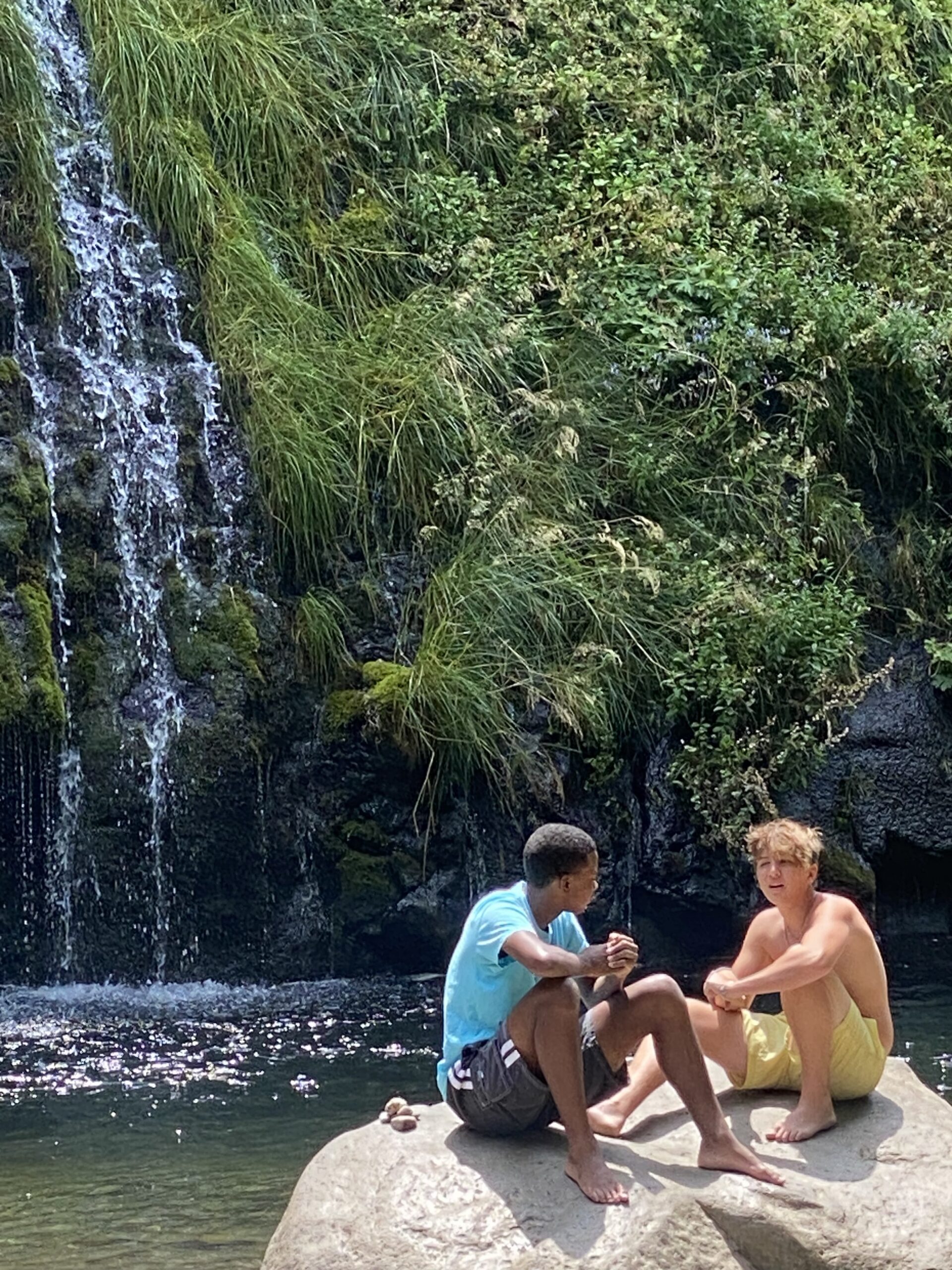
Evenings and weekends are generally reserved for personal time, and for festive time(!) with fellow students and with everyone in the learning community: from live music events, to pop-up theater, arts and crafts, starry-campfire storytelling circles, swimming, hiking/snowshoeing, or long afternoons by the pool in the meadow. Four-day breaks each month between academic blocks offer more time for integration.
Students switch on and off in staggered summer periods where half take a six-week summer break to travel home, while the other half does a six-week shift of service work to contribute to the campus development or the Lodge.
A few things prospective applicants should know:
-
- Jubilee is a dry campus.
- There will be numerous experiments related to “digital detox”.
- Bears and mountain lions are common, though no known harmful encounters have occurred with them in the region.
This is a community that asks a great deal of the people who live and work within it. It also offers something that very few college settings do: the chance to live with genuine intention, within the natural world, alongside people who are trying, together, to live into more beautiful futures!

“The original sin is the separation of spirit and matter or, in other words, the severing and absence-ing of the sacred from everyday life. It comes from being taught over and over that the sacred is somewhere ‘out there’ or something you do only in specific buildings or specific institutions or at specific times. For our ancestors, making a clay pot (and being made by it) was a spiritual act, growing food (and being grown by it) was a spiritual act, healing (and being healed by) medicinal plants, soil, mountains and rivers was a spiritual act, gifting (and being gifted by) drinking water in the desert was a spiritual act.”
~ Manish Jain